Dietary Support and Essential Nutrients for Male Vitality
An objective, science-grounded overview of macronutrients, vitamins, minerals, and dietary patterns — presented for educational understanding.
Explore Nutrition TopicsEducational content only. No promises of outcomes.
Understanding Macronutrients for Men
Macronutrients — proteins, fats, and carbohydrates — form the structural foundation of any dietary pattern. Each plays a distinct and interconnected role in bodily functions that extend well beyond simple energy provision.
Proteins contribute to tissue maintenance and the synthesis of essential biological compounds. Carbohydrates serve as a primary fuel source, particularly for the brain and muscles during moderate activity. Fats support hormone production, fat-soluble vitamin absorption, and cellular membrane integrity.
Understanding the proportional balance of these three macronutrient groups is central to any discussion of nutritional science.
Read detailed overview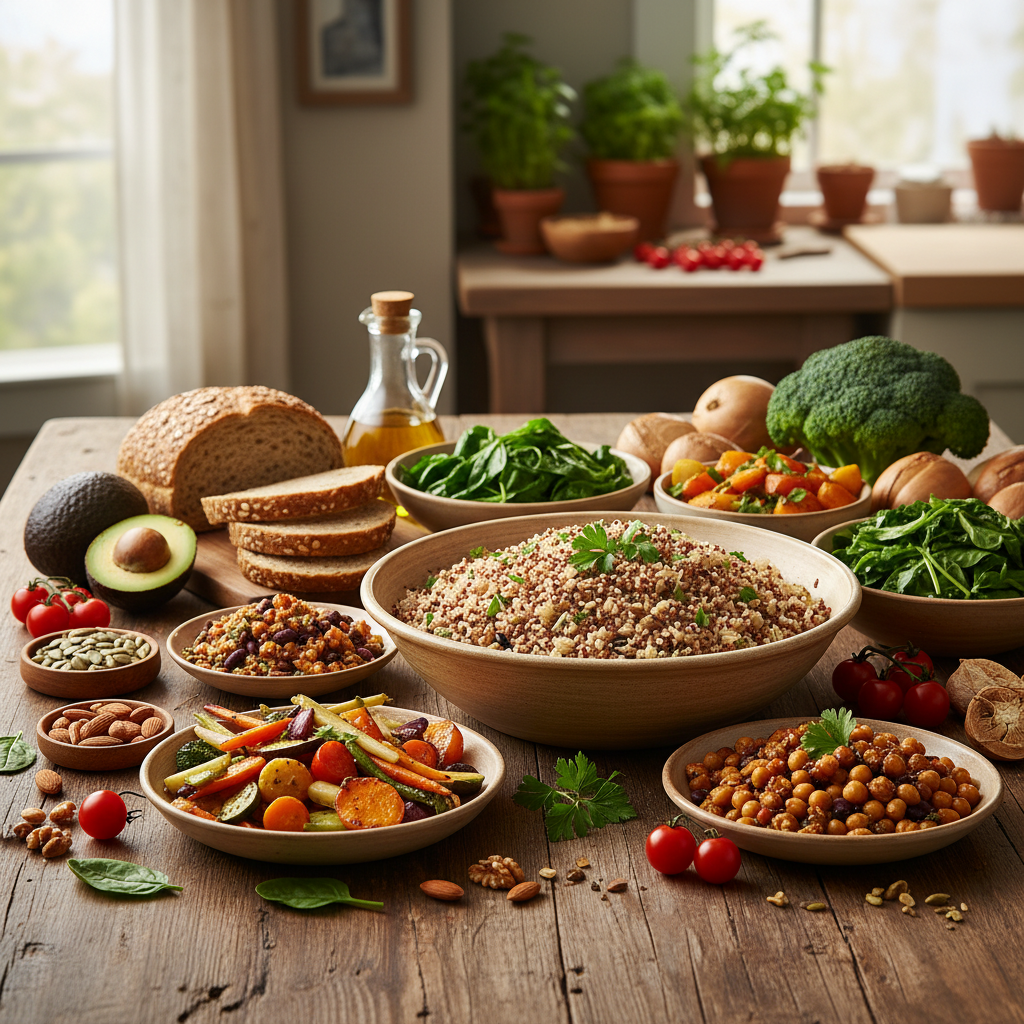
Key Vitamins for Male Health
Vitamins are organic compounds that the body requires in relatively small amounts to support a wide array of physiological processes. Several vitamins are of particular relevance when considering overall nutritional adequacy for men.
Vitamin D
Synthesised through sun exposure and found in fatty fish and fortified foods. Plays a role in calcium absorption, immune regulation, and general cellular function.
B-Complex Vitamins
A group of eight water-soluble vitamins including B12, B6, and folate. Involved in energy metabolism, nervous system function, and red blood cell formation.
Vitamin C
An antioxidant vitamin found abundantly in citrus fruits, bell peppers, and leafy greens. Supports collagen synthesis, immune defence, and iron absorption.
Vitamin E
A fat-soluble antioxidant found in nuts, seeds, and plant oils. Contributes to protection of cell membranes from oxidative processes and supports general immune function.
Vitamin K
Found in leafy green vegetables, fermented foods, and some animal products. Essential for normal blood coagulation and plays a supporting role in bone metabolism.
Vitamin A
Obtained from animal sources as retinol and from plant foods as beta-carotene. Involved in vision maintenance, immune function, and cellular differentiation.
Minerals Crucial for Men's Well-being
Minerals are inorganic elements that contribute to a broad range of physiological processes. Unlike vitamins, they cannot be synthesised by the body and must be obtained entirely through dietary sources.
Zinc
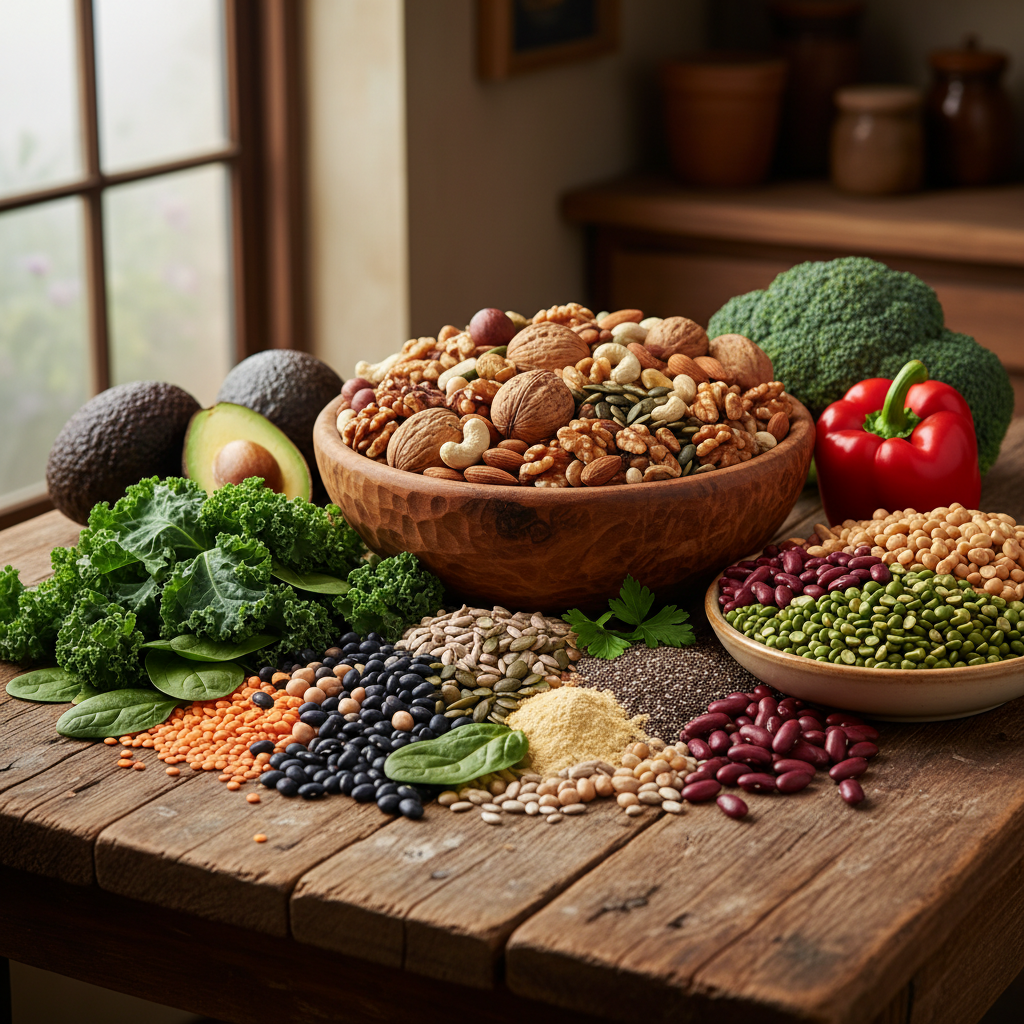
Present in oysters, legumes, and seeds. Zinc is involved in enzyme activity, protein structure, and general immune competence.
Magnesium
Found in dark leafy greens, nuts, and whole grains. Participates in over 300 enzymatic reactions and supports muscle and nerve function.
Selenium
A trace element in Brazil nuts and seafood. Acts as a cofactor for antioxidant enzymes and supports thyroid metabolism.
Iron
Primarily from red meat, legumes, and fortified grains. Central to oxygen transport in blood and energy production in cells.
Antioxidants and Cellular Health
Antioxidants are compounds that interact with and neutralise free radicals — unstable molecules generated naturally through metabolic processes and environmental exposures such as UV radiation or air pollution.
The human body maintains its own antioxidant defence mechanisms, and dietary antioxidants from food sources can complement these systems. Common dietary antioxidants include vitamin C, vitamin E, selenium, and a wide range of plant-derived polyphenols found in fruits, vegetables, teas, and whole grains.
Berries, dark leafy greens, nuts, legumes, and certain herbs and spices are among the most antioxidant-rich food categories. A varied diet incorporating multiple plant food groups naturally introduces diverse antioxidant compounds.
Free Radical Generation
A natural byproduct of energy metabolism, immune function, and environmental exposures. The body produces free radicals continuously as part of normal activity.
Endogenous Defence Systems
The body produces its own antioxidant enzymes such as superoxide dismutase and catalase to manage oxidative balance internally.
Dietary Antioxidant Sources
Fruits, vegetables, whole grains, and legumes provide a broad spectrum of exogenous antioxidant compounds that complement endogenous defences.
Balanced Dietary Pattern
A varied diet rich in colourful plant foods naturally ensures consistent exposure to diverse antioxidant compounds over time.
Dietary Fiber: Benefits and Sources
Dietary fibre refers to the indigestible portions of plant foods that pass through the gastrointestinal tract largely intact. It is broadly classified into soluble and insoluble forms, each contributing to health through distinct mechanisms.
Soluble fibre, found in oats, legumes, and certain fruits, dissolves in water to form a gel-like substance. This slows digestion and supports the modulation of blood glucose and cholesterol levels. Insoluble fibre, present in whole grains, vegetables, and wheat bran, adds bulk to stool and facilitates regular bowel movement.
Beyond its structural role in digestion, fibre serves as a substrate for beneficial intestinal bacteria, contributing to a diverse and balanced gut microbiome.
Read full material
Hydration Principles
Water is the most essential nutrient for bodily function. It participates in virtually every physiological process, from nutrient transport and temperature regulation to waste elimination and joint lubrication.
Adequate hydration varies by individual based on body size, activity level, climate, and dietary composition. Water-rich foods such as cucumbers, watermelon, and soups contribute meaningfully to total daily fluid intake alongside beverages.
The colour of urine is commonly cited as a practical indicator of hydration status, with pale yellow generally associated with adequate intake. Thirst, while imperfect, also serves as a basic physiological cue for fluid need.
General context: Official guidance on daily fluid intake varies by body, source, and individual circumstance. The information on this page is presented for educational purposes and does not constitute personal dietary recommendations.
Sources of Hydration
Plain water, herbal teas, diluted fruit juices, broths, and water-dense vegetables and fruits all contribute to overall daily fluid balance.
Plant-Based Nutrition for Men
Plant-based dietary patterns encompass a wide spectrum, from fully vegan approaches to flexitarian patterns that emphasise plants while occasionally including animal-sourced foods. Each offers distinct nutritional characteristics worth understanding.
Legumes (lentils, chickpeas, beans), whole grains, tofu, tempeh, nuts, and seeds are protein-dense plant foods that also provide fibre, minerals, and a variety of phytonutrients. These foods form the backbone of nutritionally complete plant-forward diets.
Careful attention to specific nutrients such as vitamin B12, iron, calcium, and omega-3 fatty acids is relevant for those following predominantly plant-based eating patterns, as some of these are less bioavailable or lower in plant compared to animal sources.
Learn more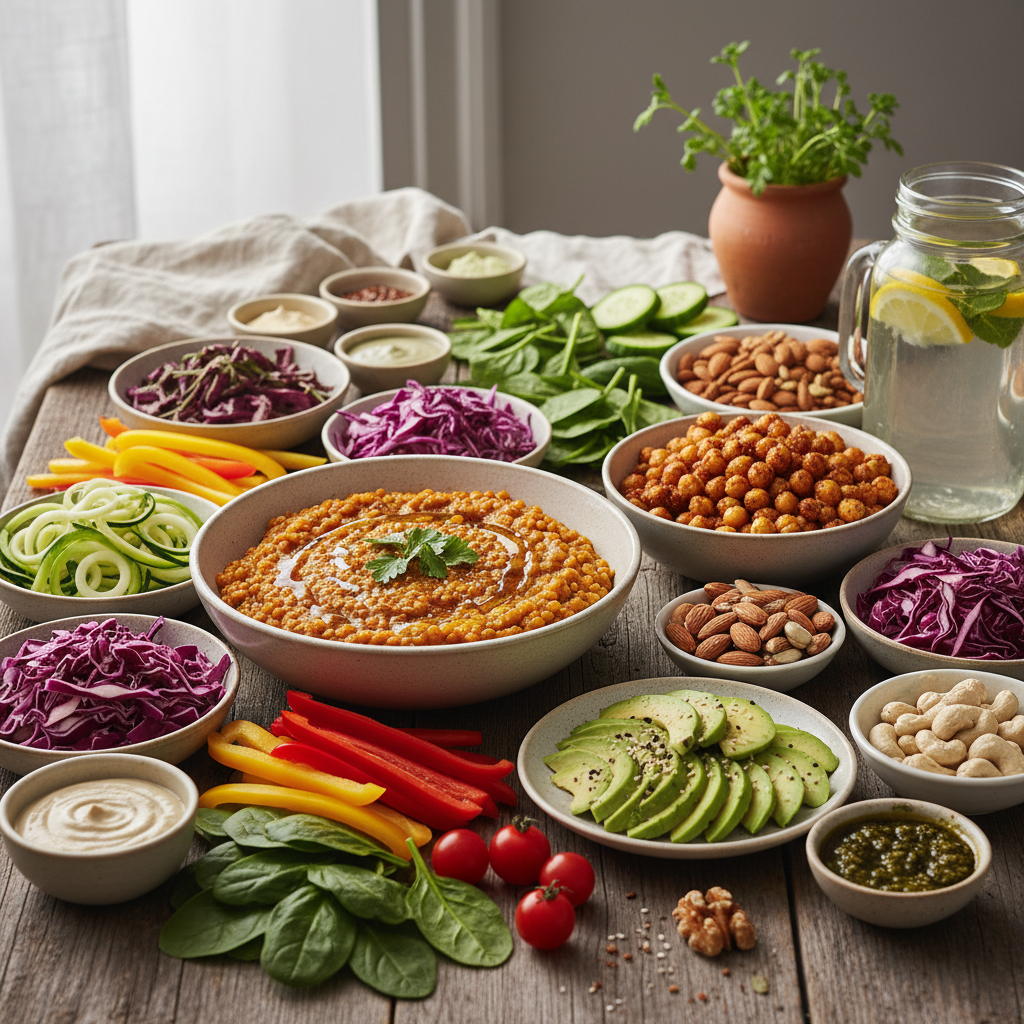
Understanding Healthy Fats
Dietary fats are a chemically diverse group of nutrients that have been subject to significant scientific re-evaluation over the past few decades. A nuanced understanding of fat types is important for interpreting nutritional guidance.
Unsaturated fats — both monounsaturated (found in olive oil and avocados) and polyunsaturated (found in fatty fish, walnuts, and flaxseed) — are generally associated with supportive roles in cardiovascular and metabolic health according to the broader nutritional science consensus.
Saturated fats, present in animal products and some plant oils (such as coconut and palm), are a subject of ongoing research regarding their differential effects depending on food source and context. Trans fats, predominantly formed through industrial hydrogenation, are generally advised against in most nutritional frameworks.
Read full material
The Role of Whole Grains
Whole grains are cereal grains that retain all three parts of the seed: the bran (outer layer), germ (embryo), and endosperm. Refined grains, by contrast, have the bran and germ removed, which also removes a significant portion of fibre, vitamins, and minerals.
Common whole grain foods include oats, brown rice, quinoa, barley, whole wheat bread and pasta, and bulgur. These foods provide complex carbohydrates that offer a more gradual release of glucose into the bloodstream compared to refined grain products.
In addition to carbohydrate energy, whole grains contribute meaningful quantities of B vitamins, iron, magnesium, selenium, and dietary fibre to the overall diet.
| Whole Grain | Key Nutrients | Common Dietary Uses |
|---|---|---|
| Oats | Beta-glucan, manganese, phosphorus | Porridge, granola, baked goods |
| Brown Rice | Magnesium, B vitamins, fibre | Side dishes, grain bowls |
| Quinoa | Complete amino acid profile, iron, zinc | Salads, main dishes |
| Barley | High beta-glucan, selenium | Soups, stews, pilafs |
| Whole Wheat | Fibre, B vitamins, iron | Bread, pasta, flour |
Nutritional Myths Debunked
Popular culture generates persistent misconceptions about food and nutrition. Examining these claims against available scientific consensus supports more informed dietary understanding.
Seasonal Eating and Local Produce
Seasonal eating refers to the practice of consuming fruits and vegetables during the period of year in which they naturally ripen within a given climatic region. In Switzerland, this encompasses a rich diversity of produce across spring, summer, autumn, and winter growing cycles.
Locally sourced seasonal foods are typically harvested closer to peak ripeness and transported shorter distances, which can preserve certain heat- or light-sensitive nutrients compared to produce that travels long supply chains. Additionally, seasonal produce in temperate European climates tends to offer greater variety through the year, naturally encouraging dietary diversity.
Incorporating local and seasonal foods into daily eating patterns is a practical and ecologically considerate approach to dietary variety that many nutritional frameworks support for general well-being.
Explore related topics
Integrating Movement with Nutrition
Physical activity and nutritional intake are mutually reinforcing dimensions of general well-being. They do not operate in isolation, and understanding their interplay provides a more complete picture of dietary science as applied to everyday life.
Moderate physical activity — such as walking, cycling, swimming, or general recreational sport — places different demands on the body's energy systems compared to a sedentary lifestyle. This in turn influences macro and micronutrient considerations, particularly carbohydrate use for muscular energy, protein for tissue maintenance, and electrolytes for fluid balance during activity.
Nutritional timing around periods of activity is a commonly discussed topic in sports nutrition science, though for most individuals engaged in general moderate activity, total daily intake quality and quantity remain the primary factors of interest.
Learn more
Reading Food Labels Effectively
Food labels are a legally mandated source of nutritional information on packaged food products. Understanding how to read and interpret them allows for more informed dietary choices based on personal nutritional understanding.
The nutritional declaration panel typically includes energy content (in kilojoules and kilocalories), and quantities per 100g and per serving of fat (including saturates), carbohydrates (including sugars), fibre, protein, and salt. In Switzerland and the European Economic Area, these components are regulated under EU Regulation 1169/2011 on food information.
| Label Element | What It Describes |
|---|---|
| Energy (kcal / kJ) | Total caloric value per 100g and per serving |
| Fat / of which saturates | Total fat and saturated fat content |
| Carbohydrate / of which sugars | Total carbs including simple sugars |
| Dietary Fibre | Indigestible plant material content |
| Protein | Total protein per 100g and serving |
| Salt | Sodium content expressed as salt equivalent |
Balanced Meal Planning Foundations
Meal planning refers to the practice of organising food intake in advance to ensure adequate coverage of nutritional needs throughout the day. From an educational standpoint, it is a practical framework for understanding how different food groups interact to form a complete dietary picture.
A well-structured meal typically includes a source of complex carbohydrates for sustained energy, a protein source for tissue support, healthy fats for satiety and nutrient absorption, and a variety of vegetables or fruits for micronutrient diversity.
Balancing these components across breakfast, lunch, dinner, and optional snacks forms the foundation of most mainstream nutritional guidance frameworks, adapted to individual preferences and cultural food traditions.
Read detailed overview
Limitations and Context of This Resource
All content on Kivox is developed for educational and informational purposes only. No information presented on this site constitutes personal dietary advice, a medical recommendation, or a substitute for consultation with a qualified healthcare or nutrition professional.
Nutritional science is an evolving field, and individual physiological responses to dietary patterns vary considerably. What is described here reflects general scientific understanding and does not represent prescriptive guidance for any specific individual.
Explore Related Topics for a Deeper Understanding
Navigate through the full range of nutritional topics covered on Kivox to build a well-rounded educational foundation on diet and well-being.